NNW Media Production Suite · Oct 2025 – Present
Move captured footage through one visible production path.
Editing, synchronization, review, and publishing tools positioned between raw broadcast media and platform-ready output.
- Ownership
- Sole designer, engineer, and operator
- Primary users
- Editors and media operators who need one controlled path from broadcast footage to reviewed, destination-specific deliverables.
Four views from the live production suite: the media library, vertical editor, multi-POV workflow, and social publisher.
The problem
The work starts before the interface.
Short-form delivery requires reframing, review, synchronization, rendering, and channel-specific output. Moving those tasks across disconnected tools makes provenance and handoff state difficult to follow.
Production interface
What the live product makes visible.
Each frame below is a direct capture of the operating product. The annotations describe the workflow decision the view represents.
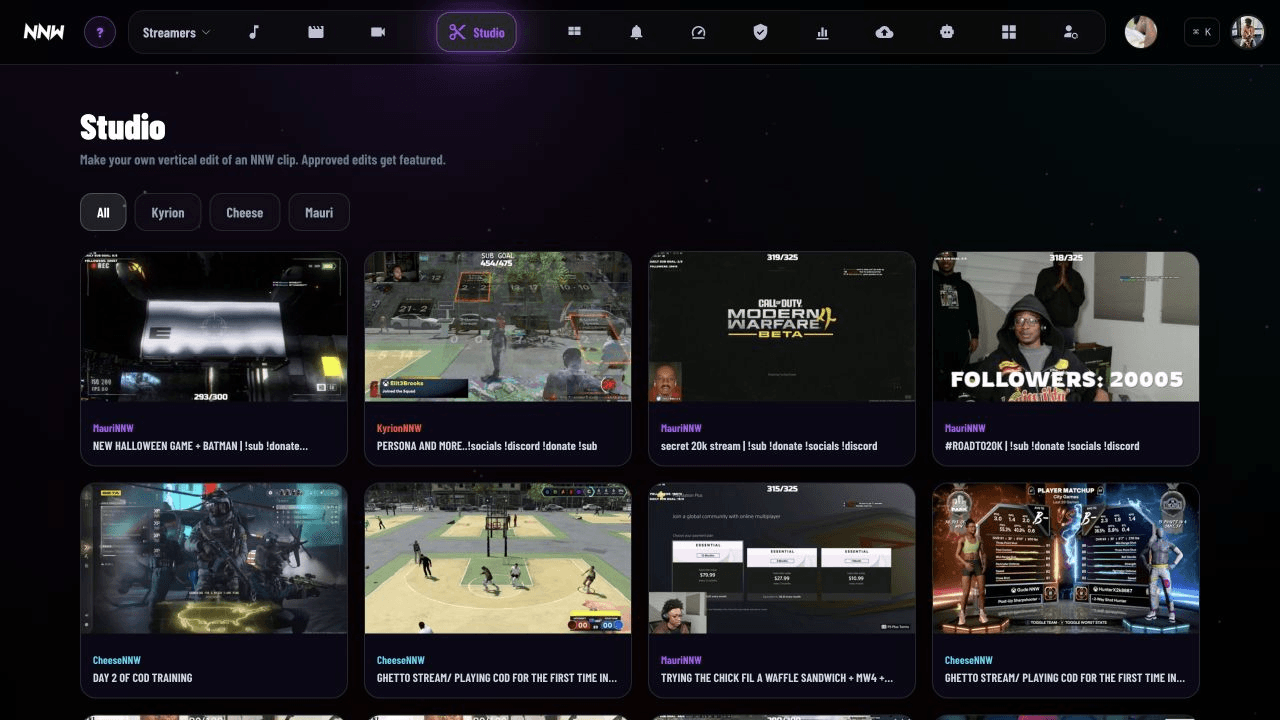
Begin with one media library
The production Studio keeps captured assets and their next editing actions together instead of scattering files across handoff tools.
- The media record remains the anchor for each downstream task.
- Editors can open the right workflow from the asset itself.
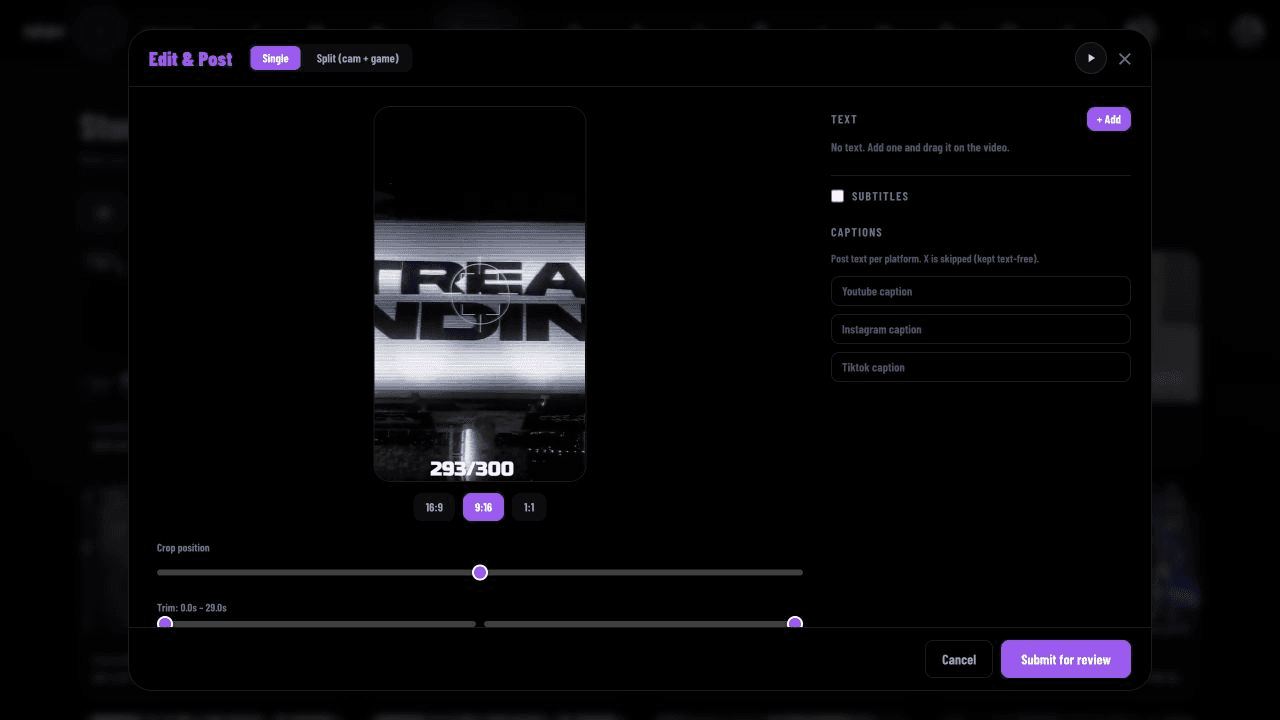
Reframe for vertical delivery
The shipped editor turns horizontal broadcast footage into a vertical composition with crop and layout controls around the real preview.
- The target composition stays visible while settings change.
- Heavy media work is handed to a dedicated render worker.
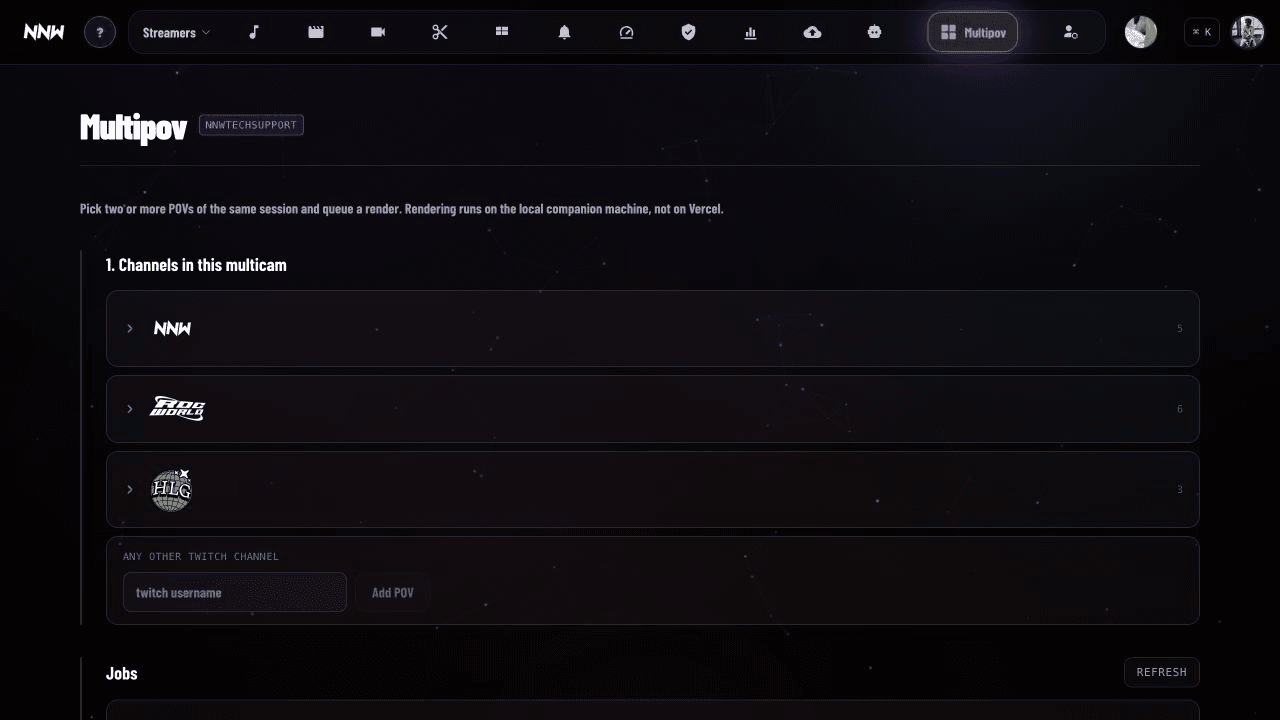
Align simultaneous points of view
The multi-POV surface groups source channels around one event so editors can establish a common timeline before rendering.
- Independent sources remain identifiable throughout alignment.
- Shared event context reduces manual timeline reconstruction.
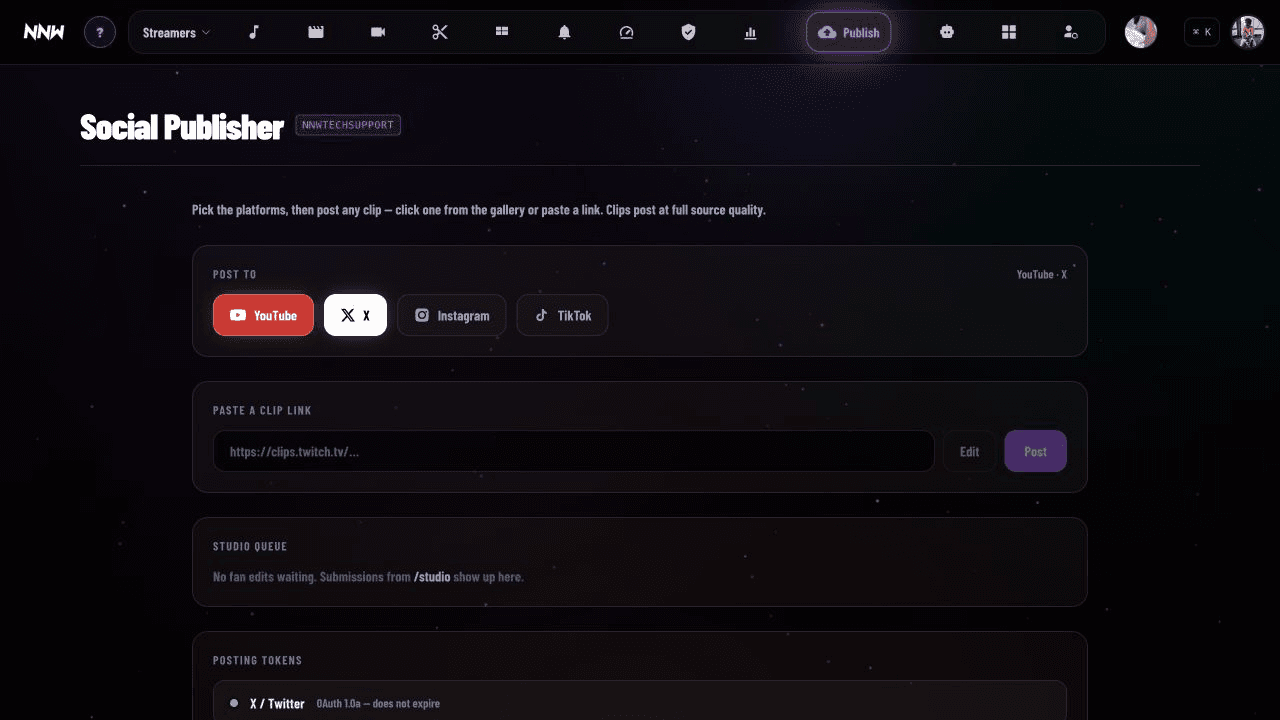
Finish in the publishing queue
The final surface brings destination choice, generated copy, review state, and delivery status into one operating view.
- Platform-specific copy is reviewed alongside its source asset.
- No connected-account credentials are exposed in this record.
System boundary
A readable flow, not a deployment map.
This is the level of architecture useful to a product reviewer: responsibilities and handoffs, without schemas, endpoints, thresholds, or topology.
- Captured media
- Edit and align
- Review workspace
- Render worker
- Publishing queue
Scope
What the system owns.
- 01
Reframes horizontal broadcast footage for vertical short-form output.
- 02
Supports a copyright and editorial review point before distribution.
- 03
Aligns footage from multiple simultaneous points of view.
- 04
Coordinates local media-rendering workers with cloud publishing workflows.
Results
What changed.
- Connected editing, review, synchronization, rendering, and publishing state.
- Kept compute-heavy media work on purpose-built local workers.
- Produced destination-specific outputs from one production workflow.
Technology
Built with.
FFmpeg, Python, TypeScript, Cloudflare Tunnel, Oracle Cloud